

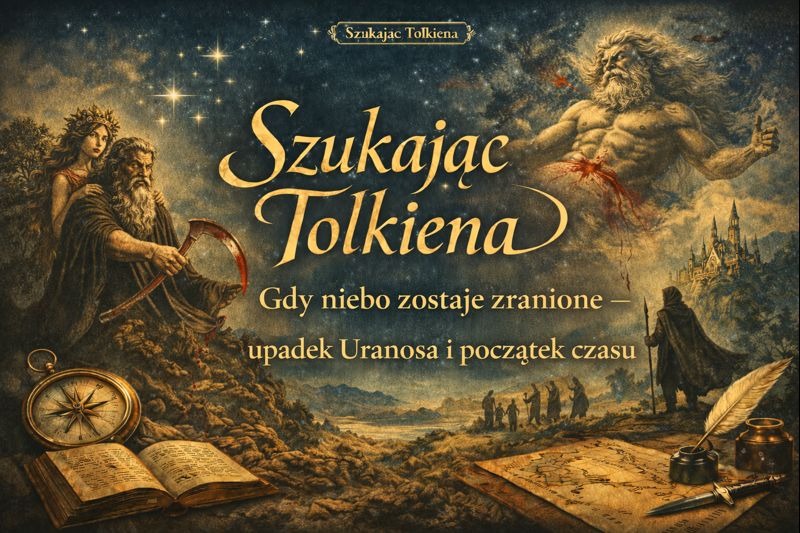
Szukając Tolkiena: Gdy niebo zostaje zranione – upadek Uranosa i początek czasu

Są mity, które nie próbują być łagodne.Ten jest jednym z nich. Koniecznie zobacz > Tolkien Studies Academy – kurs o Śródziemiu Uran spłodził Tytanów na Matce Ziemi, ale zanim pozwolił im dorosnąć do własnej siły, strącił swoich zbuntowanych synów Cyklopów do Tartaru. Do miejsca tak głębokiego, że Grecy musieli je…

Aby przeczytać dalszą część artykułu, potrzebna jest aktywna prenumerata. Możesz wykupić ją TUTAJ

Szukając Tolkiena: Gdy czas się starzeje – pięć wieków człowieka

Jednym z najbardziej przejmujących mitów greckich nie jest opowieść o bogach, lecz o nas samych.O tym, jak bardzo z perspektywy dawnych opowieści człowiek potrafi się zmienić. I jak bardzo potrafi się oddalić od początku. Koniecznie zobacz > Tolkien Studies Academy – kurs o Śródziemiu Warto przy tym pamiętać, że Grecy…

Aby przeczytać dalszą część artykułu, potrzebna jest aktywna prenumerata. Możesz wykupić ją TUTAJ

Szukając Tolkiena: Gdy Ziemia budzi bogów – narodziny świata olimpijskiego

Są mity, które brzmią jak pieśń. I są takie, które brzmią jak pierwszy oddech świata ciężki, wilgotny, jeszcze nie do końca uformowany. Mit o stworzeniu świata olimpijskiego należy właśnie do tych drugich. Koniecznie zobacz > Tolkien Studies Academy – kurs o Śródziemiu Na początku wszystkiego była Matka Ziemia. Wyłoniła się…

Aby przeczytać dalszą część artykułu, potrzebna jest aktywna prenumerata. Możesz wykupić ją TUTAJ

Szukając Tolkiena: Gdy noc składa jajo – orficka opowieść o początku

Nie ma jednej greckiej opowieści o stworzeniu świata. I może właśnie dlatego Grecja tak bardzo mnie fascynuje. Jedni mówili, że wszystko wyłoniło się z nurtu Okeanosa – rzeki, która opasuje świat niczym pradawna granica istnienia a Tetyda była matką wszelkiego życia. Brzmi to jak mit spokojny, wodny, miękki w swojej…

Aby przeczytać dalszą część artykułu, potrzebna jest aktywna prenumerata. Możesz wykupić ją TUTAJ

Szukając Tolkiena: Gdy świat rodzi się z tańca – pelazgijski mit stworzenia

Na początku nie było ziemi pod stopami.Był Chaos bezkształtny, bezimienny, cichy. Koniecznie zobacz > Tolkien Studies Academy – kurs o Śródziemiu I z tego Chaosu wyłoniła się Eurynome, Bogini Wszechrzeczy. Naga, samotna, nie znajdująca miejsca, na którym mogłaby stanąć. Nie było jeszcze lądu, więc oddzieliła niebo od morza i zaczęła…

Aby przeczytać dalszą część artykułu, potrzebna jest aktywna prenumerata. Możesz wykupić ją TUTAJ

Szukając Tolkiena: Tam, gdzie zaczynają się mity – Grecja

Grecja była i być może nadal jest przede wszystkim krainą mitów. Krainą, w której człowiek od tysięcy lat nie tylko żył, ale próbował zrozumieć sens życia, natury, cierpienia i piękna. Kiedy dziś sięgam po mity greckie, mam wrażenie, że wchodzę do tej samej przestrzeni duchowej, do której Tolkien wprowadzał mnie…

Aby przeczytać dalszą część artykułu, potrzebna jest aktywna prenumerata. Możesz wykupić ją TUTAJ

Tolkienology in Poland: origins, research directions and contemporary forms of reception

Introduction and methodological assumptions


Since the second half of the 20th century, J.R.R. Tolkien’s work has been a key reference point for research on fantasy literature, modern mythmaking, and the cultural function of mythic narratives. Internationally, the author’s work, The Lord of the Rings, has enjoyed a rich interpretive tradition, encompassing philological, theological, mythological, and cultural studies. Against this backdrop, Tolkien’s reception in Poland has developed in a unique way, conditioned both by the political context and the dominant models of literary interpretation in the humanities of the second half of the 20th century.

International Tolkien studies have developed a rich methodological framework, represented by scholars such as Tom Shippey and Verlyn Flieger, whose works established philological and mythopoetic approaches as dominant interpretive paradigms. In Poland, however, systematic research on Tolkien’s works remained fragmented and marginal, lacking a coherent historiographical synthesis of reception processes.

The aim of this article is to reconstruct the origins of Polish Tolkienology and analyse its main stages of development from the early, readerly reception of the 1960s–1980s, through the fandom breakthrough of the 1990s, to contemporary, hybrid forms of reflection situated at the intersection of academia and participatory culture. The work focuses not so much on the interpretation of Tolkien’s individual works, but on examining the reception discourses that shaped the presence of his work in Polish cultural space.

Methodologically, the text draws on literary history and cultural studies, supplemented by elements of sociology of knowledge and reception studies. The approach adopted is diachronic and problematic: it captures both the variability in evaluations and classifications of Tolkien’s work and the enduring tensions between popular and academic reception. Particular attention is paid to the role of translation, fandom, and non-institutionalized research initiatives as factors contributing to the development of the field of Polish Tolkienology.


Argument


The article argues that the development of Polish Tolkienology was asymmetric and delayed. This asymmetry can be observed in three areas: 1) translation-led reception, 2) fandom-driven interpretive practices, and 3) the absence of long-term institutional research programs. Its dynamics were largely determined by non-institutional factors: translation decisions, grassroots fandom practices, and subsequent authorial initiatives operating outside the academy. Paradoxically, it was precisely the long-standing dominance of non-academic reception that created the conditions for the emergence of a contemporary, hybrid model of Tolkien studies in Poland a model based on high methodological awareness yet independent of traditional institutional structures.


1. The beginnings of the reception of J.R.R. Tolkien’s works in Poland (1960s–1980s)


The reception of J.R.R. Tolkien’s work in Poland began relatively late compared to Western Europe and the United States. While in the Anglo-Saxon world, The Lord of the Rings became the subject of intense critical debate both in academic and countercultural circles in Poland, readers’ initial contacts with Tolkien’s work were limited, indirect, and strongly influenced by the political and publishing conditions of the communist era.

Translations played a key role in this process, particularly those by Maria Skibniewska, whose importance for the Polish reception of The Hobbit and The Lord of the Rings is difficult to overstate. These translations, distinguished by their high linguistic culture, stylistic consistency, and attention to the internal coherence of the world presented, not only enabled Polish readers to access Tolkien’s prose but also significantly shaped the prevailing way of reading it. In practice, it was Skibniewska’s translation decisions that became the foundation of the Polish “canonical” image of Middle-earth.

At the same time, however, the early readership was not adequately reflected in the parallel development of academic reflection. In academic circles, Tolkien’s work long operated on the margins of research interests, perceived primarily as fantasy literature or more often as literature for children and young adults. This classification, though partially justified by the publishing context (the publication of The Hobbit in series aimed at younger readers), effectively narrowed the field of interpretation and hindered the treatment of the legendarium as a fully-fledged subject of literary studies.

Consequently, there has been a lack of systematic philological analyses that would take into account both the deep roots of Tolkien’s prose in medieval traditions and his conscious use of language, mythmaking, and epic narrative structures. The mythological, theological, and philosophical dimensions of the legendarium the foundation of the author’s mythopoeic project have remained largely unnoticed or reduced to a decorative function, typical of fantasy literature in its popular, entertaining sense.

This state of affairs meant that the Polish reception of Tolkien between the 1960s and 1980s was asymmetrical: on the one hand, a vibrant, albeit informal, reading community was developing, while on the other, academic reflection capable of a critical and methodologically grounded description of the phenomenon of his work was almost entirely absent. Only the cultural transformations of the late 20th century and the gradual opening of Polish literary studies to the study of fantasy and mythology enabled more in-depth, interdisciplinary readings of Tolkien’s work.


2. The 90s and the fandom breakthrough


A significant moment in the history of the Polish reception of J.R.R. Tolkien’s work came in the 1990s, when, as a result of political transformation, the liberalization of the publishing market, and the dynamic development of popular culture, there was a significant increase in interest in fantasy literature. This phenomenon was part of a broader process of redefining cultural hierarchies after 1989, in which forms previously marginalized or considered “inferior” gradually began to gain social visibility and symbolic legitimacy.

In this context, Tolkien’s work gained a new sphere of influence, extending beyond individual reading. The 1990s saw the emergence of the first organized fan communities: fanzines, informal discussion clubs, fantasy conventions, and, by the end of the decade, internet forums and thematic websites focused on the world of Middle-earth. Fandom became a space for intense interpretative, archiving, and popularization activity, where attempts were made to systematize knowledge of the legendarium, compare variant translations, reconstruct the chronology of events, and analyse characters and motifs.

While academic reflection on Tolkien in Poland remained underdeveloped, fan communities assumed the role of repository for the continuity of this reception. It was fandom that sustained interest in the work of the author of The Lord of the Rings , initiated long running interpretive debates, and created informal “proto-archives” of Tolkienological knowledge. In many cases, these activities demonstrated considerable textual erudition and familiarity with the corpus of sources, though they were not rooted in the methodological framework of literary studies.

At the same time, however, the dominance of the fan perspective contributed to the ambivalent status of Tolkien’s reception in Polish academic discourse. Reflection on his work was sometimes perceived as informal, emotionally invested, and lacking methodological rigor, which contributed to the further distancing of institutional humanities from this field of research. As a result, a persistent tension arose between grassroots forms of reception and academic standards of interpretation a tension that, for years to come, delayed the process of institutionalizing Polish Tolkienology.

Paradoxically, however, it was precisely the activity of fandom that created the conditions for the subsequent development of scholarly research. The reading skills developed in the 1990s, communication networks, and the wealth of collected materials became, in subsequent decades, a resource from which researchers emerged capable of combining a passion for interpretation with academic tools. The fandom breakthrough of the 1990s can therefore be viewed not only as an alternative form of reception, but also as a transitional stage between popular reception and the gradual professionalization of Tolkien research in Poland.


3. Tolkien between academia and popular culture at the turn of the 20th and 21st centuries


At the turn of the 21st century, the reception of J.R.R. Tolkien’s work began to gradually change. This process resulted from the convergence of two fundamental factors: on the one hand, the global impact of Peter Jackson’s film adaptations, and on the other, the growing interest in interdisciplinary research in the humanities, encompassing myth, narrative, language, and cultural constructions of identity.

The film adaptations of The Lord of the Rings (2001–2003) played a key role in the mass popularization of the world of Middle-earth, significantly expanding the audience for Tolkien’s work in Poland as well. The scale of this impact was unprecedented: a work previously associated primarily with fantasy literature or fandom circles became a part of the global popular culture landscape. At the same time, the film adaptations contributed to simplifying Tolkien’s image in public discourse, perpetuating his role as the author of a spectacular fantasy epic, a phenomenon that has not always fostered in depth literary scholarship.

At the same time, however, the humanities both globally and in Poland—were experiencing a shift toward research on mythmaking, symbolic narrative, and the longevity of cultural traditions. In this context, Tolkien’s work was increasingly analysed in relation to Norse mythology, the Christian tradition, the psychology of archetypes, and the history and philosophy of language. Works emerged that interpreted the legendarium as a coherent mythopoetic project, embedded in the European intellectual heritage, rather than merely as a product of modern genre literature.

Despite these favourable trends, Polish Tolkienology continued to develop largely outside of stable institutional structures. Scholarly publications were scattered, appearing in journals with a broad humanities focus or as chapters in collective volumes. They rarely resulted from long term research projects focused solely on Tolkien’s work. Research on his work typically remained a peripheral field of scholarly interest, subordinated to other areas of philological, cultural, or religious studies reflection.

As a result, the gap between academia and the popular public remained unfilled. On the one hand, there existed a broad and active audience, shaped by fandom and mass media; on the other, there was a lack of an institutionally anchored scholarly narrative capable of mediating between academic erudition and popular interest in Tolkien’s work. This tension, also present in other areas of fantasy literature studies, was particularly pronounced in Tolkien’s case, stemming from the exceptional scale of his work’s impact and its multifaceted, difficult to categorize status.


4. Contemporary trends in Polish research on Tolkien’s works


In recent years, Polish research on J.R.R. Tolkien’s work has seen a marked shift in interpretive emphasis and a shift in the dominant models of Tolkienological reflection. Interdisciplinary approaches are playing an increasingly important role, combining classic literary tools such as narrative, genealogical, and philological analysis with perspectives drawn from cultural sociology, depth psychology, mythology, and contemporary cultural studies. This approach allows for a more comprehensive understanding of the legendarium, viewed not only as a collection of literary texts but also as a complex cultural project with long term social and symbolic impact.

The model of research authority within this field is also changing. While in earlier decades formal academic affiliation was crucial, today increasing importance is being placed on methodological consistency, transparency in working with sources, and the ability to engage in dialogue with international research traditions. Authority is built not so much through institutional legitimacy, but through the quality of argumentation, awareness of the state of research, and the ability to critically engage with existing interpretations both academic and popular.

This phenomenon can be observed not only in Poland, but also internationally, where independent research initiatives complement institutional Tolkien studies, occupy particular significance, positioning themselves at the intersection of academia and participatory culture. These projects combine analytical integrity with an essayistic format accessible to readers beyond the narrow circle of specialists, while simultaneously maintaining conceptual precision and interpretive responsibility. They thus respond to the needs of readers seeking in depth reflection on Tolkien’s work, transcending the norms of fandom reading while also engaging in dialogue with it.

The development of such forms of research activity indicates a gradual redefinition of the boundaries between academic research and non-institutionalized reflection. In the case of Tolkienology, this process is particularly significant, as it allows for overcoming the long standing dichotomy between “scholarship” and “passion,” which for decades has hindered the full recognition of Tolkien’s work as a subject of serious humanities research. Contemporary trends suggest that the future of Polish Tolkien studies may lie in a hybrid model based on high methodological rigor, yet open to new forms of communication and knowledge dissemination.


Conclusion


The analysis demonstrates that the reception of J.R.R. Tolkien’s work in Poland did not develop in a linear or uniform manner. Its early stages, strongly influenced by the political and publishing context of the Polish People’s Republic and by genre classifications that reduced legendarium to children’s literature or fantasy, resulted in Tolkien’s permanent exclusion from mainstream literary studies. This gap was partially filled in the 1990s by fandom communities, which despite lacking a methodological framework played a key role in maintaining the continuity of reception and the accumulation of interpretive knowledge.

At the turn of the 21st century, influenced by the global popularity of film adaptations and interdisciplinary shifts in the humanities, Tolkien’s work gradually began to gain new interpretive frameworks. This process, however, did not lead to the full institutionalization of Polish Tolkienology, but rather to the development of an intermediate field in which academic research, essayistic reflection, and popularization work intertwine.

Contemporary research initiatives operating outside of academia based on methodological rigor and dialogue with international research indicate that the future of Polish Tolkienology may lie in a hybrid model. This model does not eliminate the distinction between scholarship and popular reception, but redefines their relationship, enabling a more adequate description of the phenomenon of Tolkien’s work as one of the most important mythopoetic projects in modern European culture.


Author

Bibliography


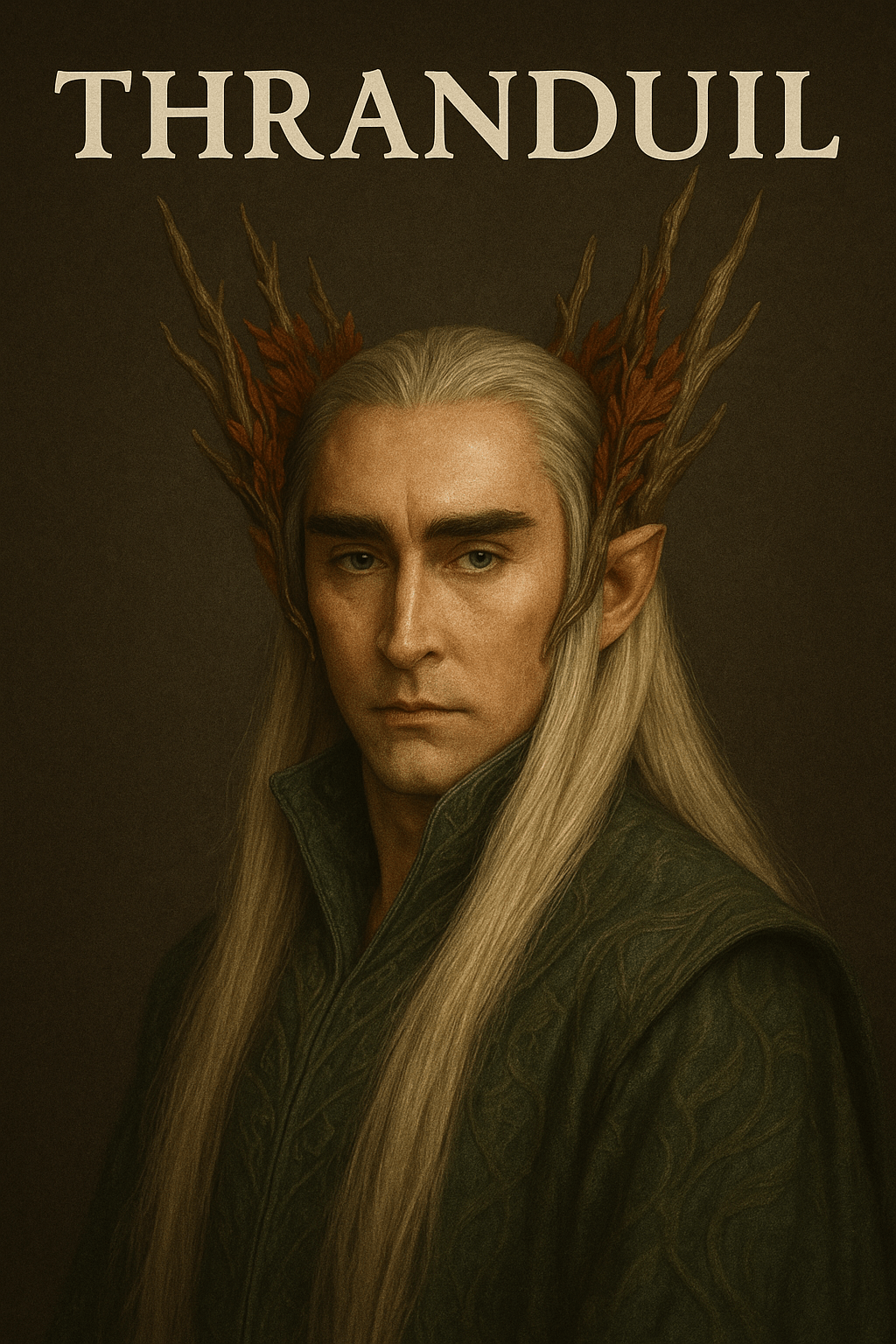
Thranduil

Thranduil – Władza, Nieufność I Etos Elfickiego Króla

Thranduil, król elfów leśnych (Sindarów) Mrocznej Puszczy, jest jedną z kluczowych, choć drugoplanowych postaci legendarium J.R.R. Tolkiena, reprezentującą model władcy ukształtowanego przez długowieczność, doświadczenie wojny oraz pamięć dawnych krzywd. Jego domeną jest Mroczna Puszcza (dawniej Wielka Zielona Puszcza), której charakter — od krainy światła po przestrzeń stopniowo ogarnianą cieniem — stanowi istotne tło interpretacyjne dla postawy samego władcy.

Koniecznie zobacz > Tolkien Studies Academy – kurs o Śródziemiu

Thranduil należy do pokolenia elfów, które brało udział w wydarzeniach Drugiej Ery, w tym w Ostatnim Sojuszu Elfów i Ludzi przeciwko Sauronowi u kresu tej epoki. Udział w wojnach o kosmicznej i egzystencjalnej skali ukształtował jego polityczną ostrożność oraz głęboką nieufność wobec obcych, zwłaszcza krasnoludów, z którymi relacje elfów leśnych były od wieków napięte. Nieufność ta nie ma jednak charakteru irracjonalnego: wynika z historycznego doświadczenia konfliktów, różnic kulturowych oraz odmiennych systemów wartości.

W Hobbicie Thranduil pojawia się jako monarcha surowy, lecz praworządny. Gdy kompania Thorina Dębowej Tarczy zostaje pojmana na terenie Mrocznej Puszczy, elfi król decyduje się na ich uwięzienie w podziemnych komnatach swego pałacu. Decyzja ta bywa interpretowana w literaturze fanowskiej jako przejaw okrucieństwa, jednak analiza tekstu wskazuje raczej na konsekwentne stosowanie elfickiego prawa: krasnoludy wtargnęły na strzeżone terytorium i odmówiły złożenia wyjaśnień, co w realiach Śródziemia stanowiło poważne naruszenie norm gościnności i bezpieczeństwa. Warunki uwięzienia nie noszą znamion tortur ani nieludzkiego traktowania, co odróżnia Thranduila od tyranicznych władców znanych z mitologii czy literatury fantasy.

Postać Thranduila nabiera dodatkowej głębi w kontekście wydarzeń po śmierci Smauga. Jako jeden z przywódców sił zmierzających ku Samotnej Górze, reprezentuje on nie tylko interesy elfów, lecz także dążenie do zachowania równowagi politycznej w regionie. Jego gotowość do konfrontacji z krasnoludami ustępuje miejsca pragmatyzmowi w obliczu realnego zagrożenia — najazdu orków i wilków. Zawarcie sojuszu z ludźmi z Esgaroth oraz wspólna walka w Bitwie Pięciu Armii ukazują Thranduila jako władcę zdolnego do elastyczności i współpracy, gdy stawką jest przetrwanie wolnych ludów.

W wymiarze kulturowym elfy Mrocznej Puszczy, pozostające pod jego zwierzchnictwem, wyróżniają się mistrzostwem w łucznictwie, sztuce kamuflażu oraz głębokim związkiem z lasem. Sam Thranduil jawi się jako strażnik elfickiej tradycji — nie tyle nostalgicznie zapatrzony w przeszłość, ile świadomy kruchości własnego świata w cieniu odradzającego się zła. Jego chłód i dystans nie wynikają z braku empatii, lecz z odpowiedzialności za lud, którego istnienie rozpięte jest pomiędzy pamięcią dawnych epok a niepewną przyszłością Trzeciej Ery.

Koniecznie zobacz > Tolkien Studies Academy – kurs o Śródziemiu

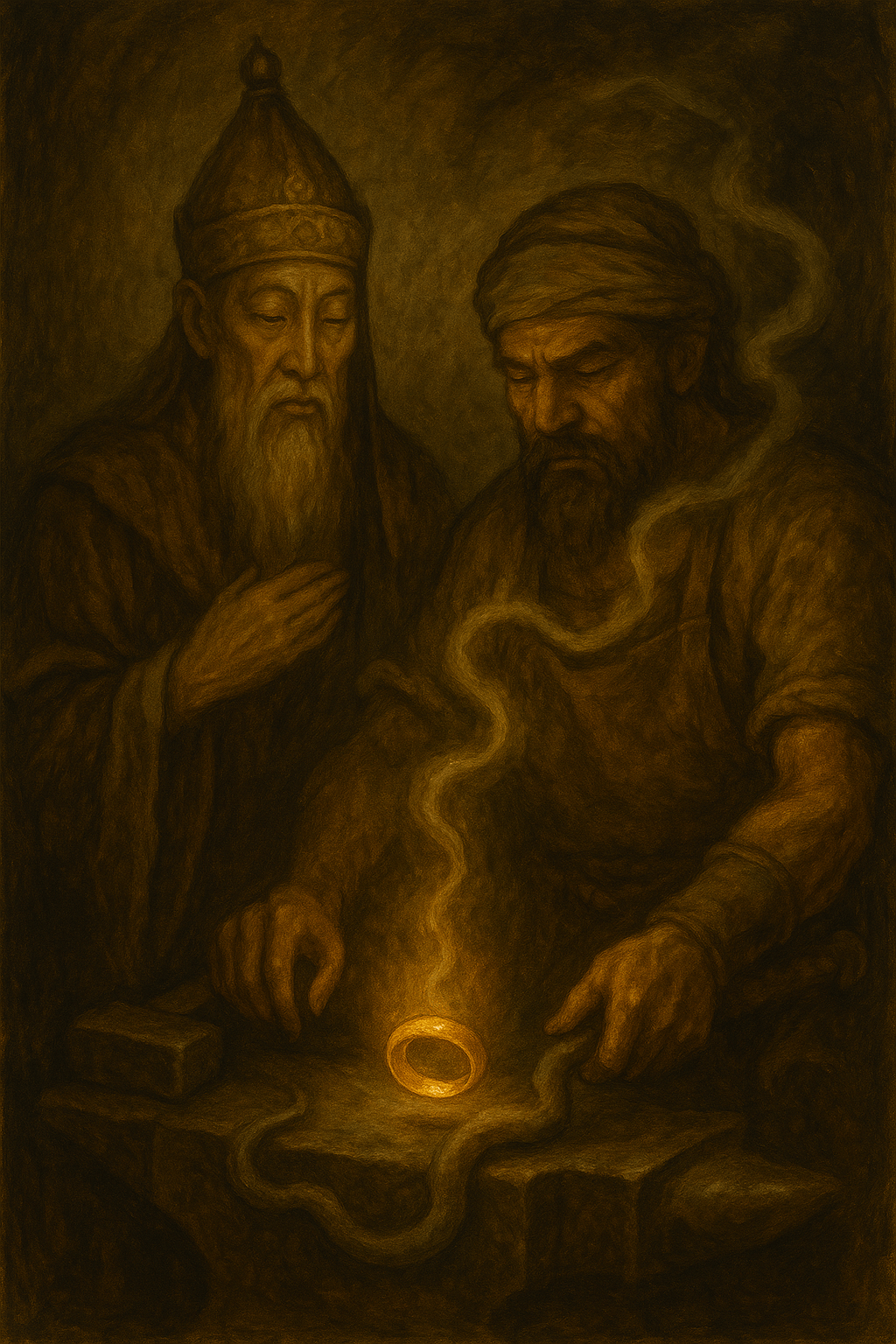
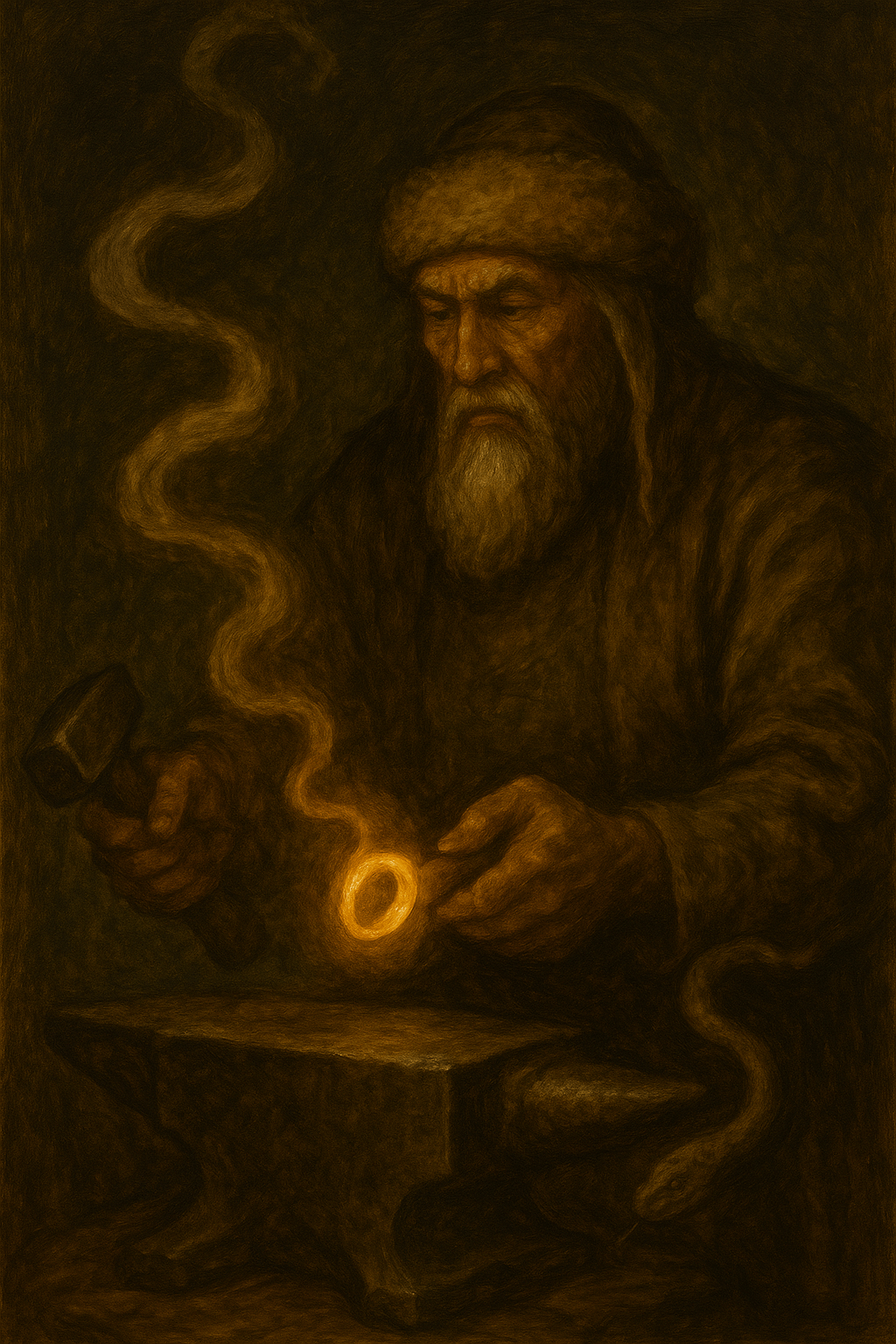
Geser i Kurkar: alchemiczne pierścienie Wschodu a mit Jedynego Pierścienia

Geser I Motyw Pierścienia Życia Wprowadzenie Epos o Geserze (znany m.in. jako Geser Khan, Gesar, Kesar) należy do najważniejszych tradycji epickich obszaru Azji Środkowej i Wschodniej, obecnych w kulturach tybetańskiej, mongolskiej, buriackiej i tureckiej. Jego geneza sięga co najmniej pierwszego tysiąclecia naszej ery, a sam mit funkcjonuje w licznych wariantach…

Aby przeczytać dalszą część artykułu, potrzebna jest aktywna prenumerata. Możesz wykupić ją TUTAJ

Alchemia pierścienia i dusza w metalu: Geser, tradycje Wschodu i Tolkien

Alchemia, Władza I Symbolika Pierścienia W Eposie O Geserze I Tradycji Eurazjatyckiej Wprowadzenie Epos o Geserze, obecny w tradycjach Azji Środkowej i Wschodniej, stanowi wyjątkowo bogaty przykład mitu, w którym symbolika metalu, alchemii i władzy królewskiej splata się w jedną, spójną strukturę kosmologiczną. Motyw złotych i żelaznych pierścieni mandali, będących…

Aby przeczytać dalszą część artykułu, potrzebna jest aktywna prenumerata. Możesz wykupić ją TUTAJ